

Causes
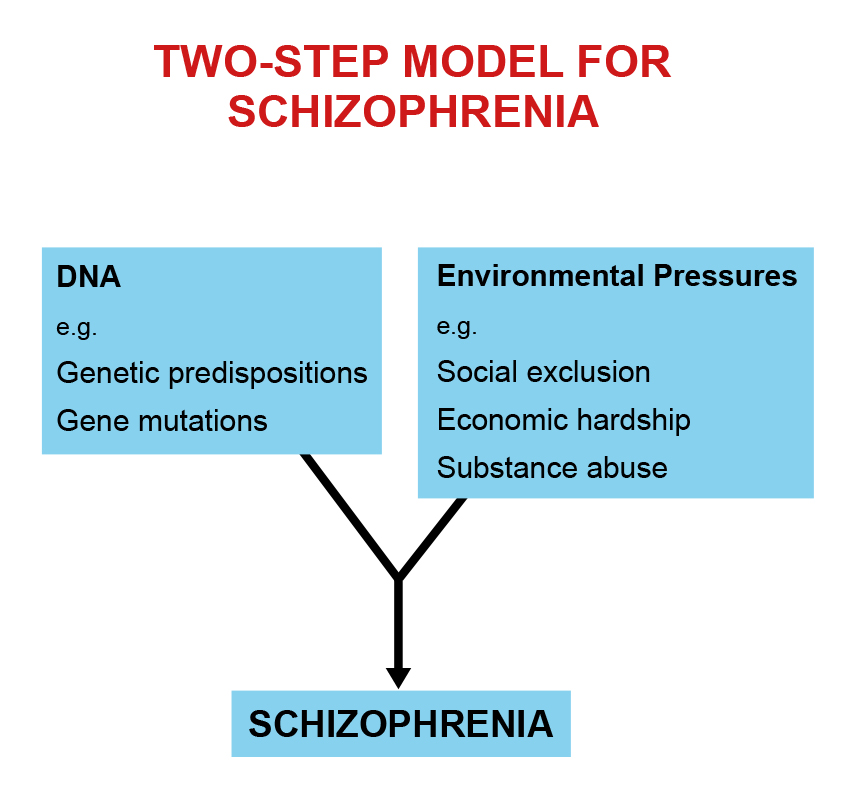
The exact cause of schizophrenia has not been fully described because the disease is still not properly understood. The development and mechanisms of schizophrenia are complex; research suggests that the condition is likely to be the result of a combination of genetic brain vulnerabilities and environmental factors such as developmental stress, viral infections and our individual social experiences, a theory known as the two-step model. It is thought that the interplay between the possible factors presents us with an increased level of vulnerability to developing symptoms of schizophrenia.
Genetics
Twin studies have highlighted the effects of genetics in the development of schizophrenia. Schizophrenia in both monozygotic twins (twins from the same fertilised egg) occurs in 48% of cases, compared to a 17% concordance rate in dizygotic twins (twins from separate fertilised eggs) and the 1% occurrence rate worldwide. As monozygotic twins share the same DNA, these statistics suggest that the development of the condition may be influenced, but not determined by, our own DNA.
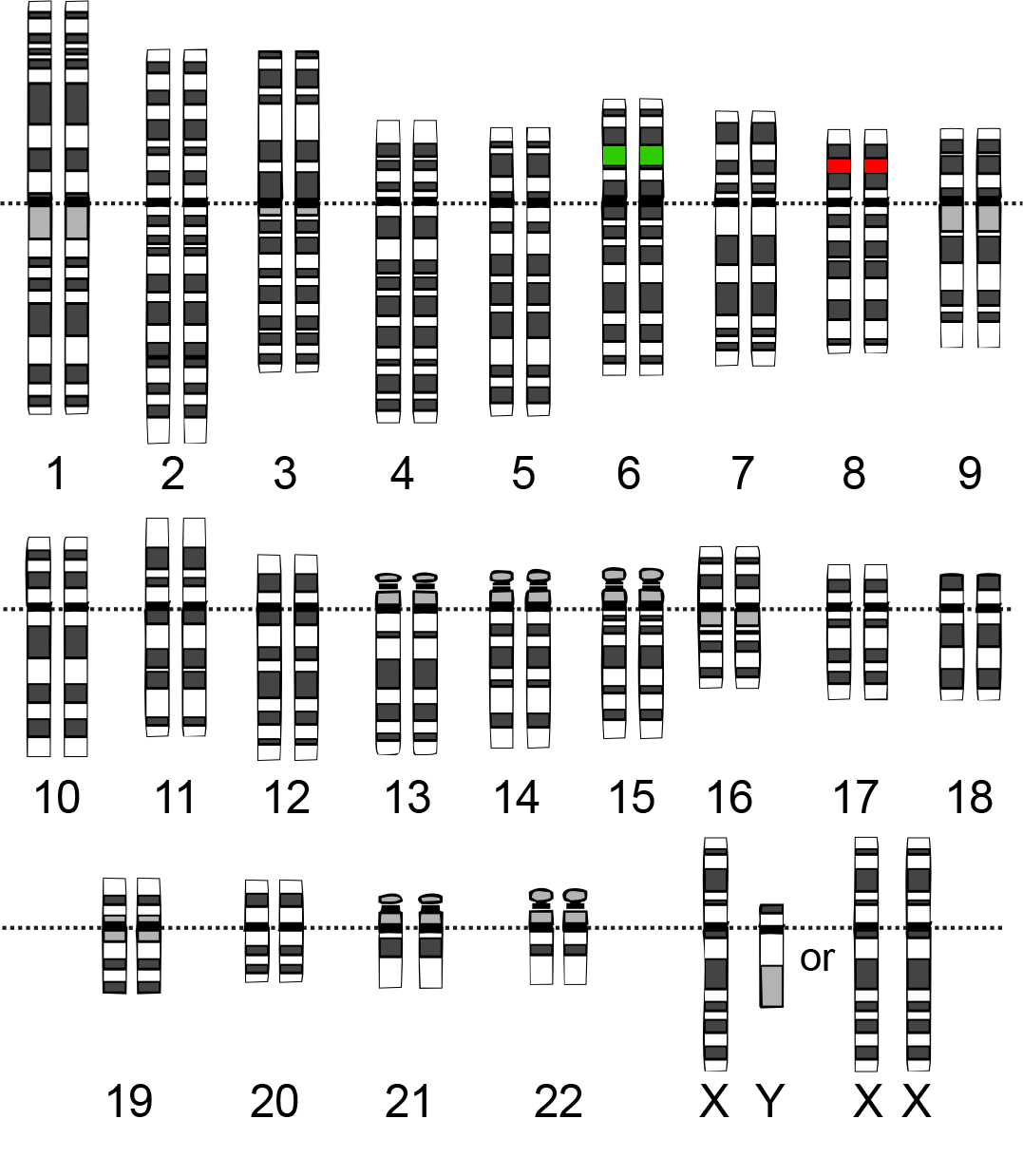 Subsequent research has identified possible candidate genes as having a potential role in increasing susceptibility to schizophrenia by analysing DNA for particular gene mutations known as single-nucleotide polymorphisms and copy-number variations that alter the normal expression of a gene. Studies show that mutations in genes encoding dysbindin (DTNBP1; location shown in green on chromosome 6) and neuregulin (NRG1; location shown in red on chromosome 8) may increase susceptibility. In experiments where mice had the dysbindin gene inactivated the mice showed signs of elevated expression of the gene that codes for the D2 dopamine receptor, which lead to increased dopamine signal transduction. Research into neuregulin has found that NRG1 knock-out mice have lower numbers of the NMDA glutamate receptor in particular regions of the brain. Changes in dopamine and glutamate signalling have both been strongly linked with the positive and negative symptoms of schizophrenia. These findings suggest that DTNBP1 and NRG1 may be genes that regulate dopamine and glutamate signalling in the brain.
Environment
Social Experiences
People who face particular adverse social experiences throughout childhood and early adulthood have been shown to have an increased risk of developing symptoms. Social exclusion, financial hardship and stressful events such as abuse or trauma have been associated with development of the schizophrenia in later life.
It seems that where you live may also be a factor as a study in Sweden found a 68%-77% increased risk of schizophrenic psychosis for people living in the most populated and urbanised environments.
Infections
A number of studies have hinted at a possible link between some viral infections (such as influenza, polio, measles and rubella) in utero or in childhood and the development of schizophrenia. Other studies suggest schizophrenia is more common in people that were born in the winter months, when infection rates are at their highest.
Substance Abuse

There is some evidence of a relationship between the development of schizophrenia and the use of illegal dugs such as cannabis and amphetamines.
Studies show that cannabis use itself does not cause schizophrenia, but it may significantly increase the risk of developing it in the future. Use of amphetamines has been shown to increase the levels and activity of dopamine and users can display symptoms of psychosis that resemble those displayed by people with schizophrenia (see dopamine hypothesis of schizophrenia).